








Reading: It Does A Business Good
November 2014 by Sharon Dillard
 We’ve all heard the saying that reading is fundamental. Literacy forms the basis of any society, group or even business. We write memos, procedure manuals and even books in the hopes we can convey some meaning and knowledge to another person. Though the days of leafing through a hardbound encyclopedia are long past (sniff, sniff. Thanks, Google!), when we need to know how to fix something, find a resource or even make reservations for a business dinner, we read.
Reading opens gateways to new opportunities, especially in business. We read about the promotion of a business colleague, a new company opening up or a lecture we’d like to attend that could impact our business. As we head into the holiday season, consider sharing your favorite business books with friends, colleagues and employees. And consider these reasons why reading is important for anyone looking to open, grow or get a job in a business.
Reading Can Find You A Good Job. Reading job notices, filling out job applications, endless forms for benefits from human resources, finding your way to a meeting via GPS, or reading a map’s legend in an office building are all skills everyone needs in order to find a good job.
Reading Can Keep A Good Job. Many jobs require reading as a part of job performance. And there are reports, memos and emails to write, read, absorb and instructions to implement. Good reading skills open up unlimited doors to contributing to the workplace and moving up the career ladder. Your boss may love your idea to improve the business when you talk about it, but will want to see your idea fleshed out with an action plan – in writing.
Reading Develops The Mind. Thinking skills are like a muscle. The more you use them, the stronger they grow. Comprehending complex ideas is increasingly important in today’s work world – to understand how one’s job and company fits in the marketplace and to change with the times.
Reading Is How We Learn New Things. Books, magazines and even the Internet are great learning tools. They require one to read. And a person who reads is more likely to learn new things in any area they are interested in. Our world abounds with new information, and reading is how we embrace new ideas.
People Who Read Are Creative. The ability to take ideas from one place and apply them to another is a key success factor in business. So read that entrepreneur’s book, that profile of a business leader or thought-leader’s latest article. The creative juices will flow!
Reading Improves Spelling And Grammar. This is especially important in the business world. How can we trust an employee or company to pay attention to the details of our order when they can’t spell or their grammar is atrocious? We may say we don’t judge those with poor grammar and spelling, but really, we do. We assume they are unintelligent, inconsiderate and we don’t want to interact with them professionally.
The Pen Is Mightier Than The Sword. The saying is cliché, but great ideas, written down, have changed the world. By reading about the good ideas and exposing faulty logic, we avert problems and push forward plans that are beneficial.
Words – spoken and written – are the building blocks of business. You’re reading this article because you think I have something important to say. And because I write this regular column, you believe my business is worth your attention and consideration. Which it is, of course. But you may not have heard of me or my business without reading this column. Just sayin’.
Published: New Mexico Apartment News Magazine – Nov/Dec issue 2014
Sharon Dillard is the award-winning CEO of Get A Grip Inc., a national franchise kitchen and bathroom resurfacing company based in Albuquerque, New Mexico.

Manners Matter!
September 2014 by Sharon Dillard
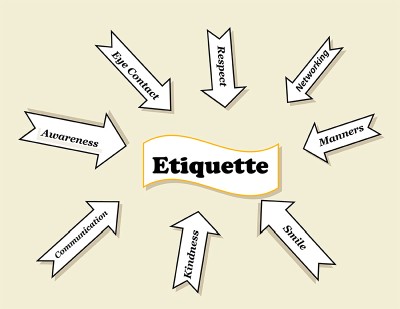 Etiquette, or the manners you use in social situations including professional workplaces and in business, is the name for the small things that we do on a daily basis that demonstrate our professionalism. Understanding and applying the rules of etiquette ensure that you grow a strong, professional business. This valuable skill set makes you stand out from others, increases your chances of success, and may help you land that dream job or client. Here are some basic etiquette tips that will ensure your professional presence makes the right impression.
First Impressions Matter: You only get one chance to make a first impression. When meeting a client, make sure you dress professionally regardless of the location.If you’re unsure what professional dress is, ask your supervisor or human resource department. Looking sloppy, messy and dirty will put off your coworkers and can turn away potential clients. Always be sure to smile and shake hands to signal your professionalism, too.
Be On Time, Prepared: Woody Allen said that 80 percent of success is showing up. People who show up on time, act politely and are ready to contribute are rewarded. Doing these things show that they respect their company, coworkers and superiors, and that they take their performance seriously. These individuals will typically earn promotions over their coworkers who are late, unprepared and disrespectful.
Follow Up: This is the flipside of being on time, prepared, and one of the most important aspects of good business etiquette. Following up when you’ve promised to call someone, send a document, deliver a product or answer a question is key. Not doing it shows disrespect. And if you don’t yet know the answer, have the product to deliver or have sent the document, then let the person know. In this case, no news is NOT good news. An apology and a revised timeline is a hundred-times better than no communication at all.
Listen: Interrupting someone when they are speaking is a no-no in any occasion, but it can be the complete end to a business relationship. Make eye contact and give the speaker your full attention to let them know you’re listening. When your turn to speak arrives, be clear, concise, and avoid industry jargon if you feel your audience won’t understand it.
Voice Mail: Always be prepared to leave a message when calling on the telephone. If you get a real person, you’re ahead of the game. If you get their voicemail, speak clearly and slowly, explain why you’re calling, and repeat your name and telephone number, even if you’re sure the person you’re trying to reach already knows who you are.
Email and Online:Virtual communication has taken over the business world, so it is crucial that our manners don’t immediately go out of the window when communicating online. Writing emails and social media posts or comments full of abbreviations and “text-speak” doesn’t cut it when communicating professionally. Instead, treat these occasions exactly as you would a business letter. Use proper grammar and make sure to check your email for correct punctuation, spelling and usage. Typing in all capital letters is the equivalent of yelling, so don’t.
Dining Out: Occasionally, you’ll be called on to have a meal or drinks with potential or current clients. When attend a business function, your best manners will be on display. People with good dining manners often impress their colleagues and counterparts. But people who wipe their hands on their clothes, blow their noses in their napkins, pick their teeth or chew with their mouths open don’t. In fact, poor table manners may lose you business you already had. If you’re unsure how your table manners are, ask a trusted coworker or professional mentor.
Practicing these basic rules of etiquette in mind will soon turn them into habits that you won’t forget. Because good business manners are always welcome, just sayin’
Published: New Mexico Apartment News Magazine – September/October issue 2014
Sharon Dillard is the award-winning CEO of Get A Grip Inc., a national franchise kitchen and bathroom resurfacing company based in Albuquerque, New Mexico.
The Puzzle of Team Building
July 2014 by Sharon Dillard
 Great leadership builds great teams – leaders make decisions (often difficult ones), set high standards and look for ways to improve. Leaders are only as successful as their teams and the great ones know that with the right team dynamics, decisions and diverse personalities, everyone wins in the end. Building great teams is a balancing act between finding the right people, giving them enough direction and freedom to experiment, fail and (hopefully) succeed. Here are some tips I’ve learned along the way to build successful teams that deliver results.
1. Know Who You Are As a Leader
You may have the best intentions, but if your message isn’t getting across because your leadership style is falling flat, modify your approach. Are you a straight shooter who sometimes steamrolls over others? Some people don’t respond well to that style and need a softer touch. When you know your leadership style, you can evaluate how well it is working with your people, and adapt. Being flexible and open to meeting people where they are. That’s your job as the leader.
2. Know the Team
Your team is a puzzle full of pieces. There are lots of ways to put them together. Each way yields a result, and some ways give better results. When you get to know your team, you get to understand their needs. Knowing your team means investing the time to understand what motivates them, how they think and how to get the best from them. By embracing the different personalities, you get the best from them.
3. Clearly Define Roles & Responsibilities
Everyone on the team needs to understand their roles, responsibilities and how they fit into the larger picture. A maverick salesperson may work best on his or her own with little supervision, while others thrive in a group environment where feedback comes regularly from the group. This is absolutely fine when everyone knows what is expected of them and where they fit in the puzzle. When all the pieces fit, each individual’s unique strengths unite to make the team a powerhouse.
4. Remind the Team of Their Purpose
Constant feedback keeps any team on track. The act of reminding the team of how and what they can be doing better, and receiving feedback from them as to how they could improve the process is important. Don’t wait until a problem occurs to make a course correction. Your team should meet regularly (whatever regularly means to your team) to discuss progress toward its goals. Every team is different, so reminding the team of their purpose and receiving updates from them doesn’t need to be formal or overly structured. A quick check in each day and a team meeting once a week is often just right for some teams. Other teams may need less frequent check-ins. All teams need someone to keep them on track. That’s the leader’s job.
5. Reward the Team
Acknowledgement and reward is a way to honor the work of the team. People love recognition, so take time to give your team the rewards they deserve. Don’t take performance for granted, even if you believe the team is just doing their job. They could be doing the job anywhere, and remain loyal to leaders and companies that they feel respect their skills and effort. Remember to be genuine as you recognize them, though. Bring in lunch during a busy or stressful point in a project, or arrange for a team outing to build camaraderie.
6. Celebrate Success
Celebration at the end of a project or reaching a goal is different from a reward. Celebrations are about reflecting on the process and what your team has done well, as well as what it could improve. By taking the time to remember what allowed you to reach your goal, you celebrate the success of the team (not of the leader) that often demanded tremendous effort.
Successful teams require attention and when your team members feel like they are part something larger than themselves; their collective energy can result in extraordinary results. If your team isn’t delivering, ask yourself why. Are you, as the leader, thinking about these 6 keys? I’m just sayin’.
Published: Apartment News Magazine – July/August issue 2014
Sharon Dillard is the award-winning CEO of Get A Grip Inc., a national franchise kitchen and bathroom resurfacing company based in Albuquerque, New Mexico.
Selling is a Marathon
May 2014 by Sharon Dillard
 Whether you’re offering widgets, cosmetics, legal services, countertop resurfacing, apartments to potential tenants, or anything else you could think of, no one can really teach you how to be a great salesperson. But, I’ve been in sales for a long time and I’ve learned some interesting insights over my career. Some took me a while to figure out, while others came very quickly and easily.
One of those things is that selling any product or service is a marathon, not a sprint. It’s a process. Sometimes the process is short – you’ve got a great offer/product/service and you are talking to the perfect customer who is ready to buy. Other times it’s like trudging uphill against the wind.
Here are some tips to make your sales cycle more manageable, no matter how long and complicated they can get.
Listen. If you are all about building a relationship, then listening to the other person’s needs becomes second nature. But don’t get personal too quick; it can make you come off as insincere. Instead, pay attention, makes notes on preferences (e.g. calling time and method – email vs. phone), and watch body language. Selling is as much about people skills as it is sales skills.
Give to get. Sales is all about finding a win-win situation for you and the customer. If you give a little – advice, a referral from your own network, a small product or service that costs you little or nothing – you’ll get a little. For example, after telling the prospect about your product or service, you might ask them to tell you about their product or company so you can determine if there’s a fit. Don’t go full bore into the sales pitch then wonder why they say “not interested.” You asked them for nothing, and possibly missed an opportunity to offer a solution to a problem.
Nobody cares how smart you are. Often, we want to regale a customer about the features and benefits of our product or service. But that can mean we come across as know-it-alls full of hot air. The truth? The customer doesn’t give a rat’s rear end about how smart you are. They just want to know that you can fix their problem.
Know your stuff, but don’t sound canned. A robotic recitation of the facts and figures of your product or service is just boring. And being obviously led down the sales pitch path is equally annoying. Leave room for back and forth in your conversation with the potential customer and adjust as needed. Trust your instincts rather than memorizing a pitch.
Identify the right person, but be open to anyone. Remember that you should always been looking for opportunities. You don’t know who the person you are talking to knows. Expand your network, even if the person you met at lunch yesterday isn’t your perfect customer. Perhaps their boss, sibling, or their hair stylist is.
Know who you are talking to. When you first meet someone, get to know who they are, what their role is, what motivates them, and what their network is like. It makes it easier to come up with a strategy that makes sense. Also, don’t forget to adjust your plan based on your experience. Taking time to build a solid foundation means you’ll be the one who gets the sale in the end.
Keep at it. Remember how I said it’s a marathon, not a sprint? You’re going to hear “no.” Just because the sale didn’t come now, doesn’t mean it won’t come later. Keep on keepin’ on, always taking feedback into consideration. Ask yourself why you’re hearing “no.” Is it your pitch? Are you listening? Is this not the right prospect? Is your product/service one with a very long sales cycle? Keep track of your hits and misses so you can analyze, adjust and improve.
No matter how long you’ve been at it and no matter what you’re selling, you’re going to make mistakes. Improving over time is the key. Many people think I’m a natural-born salesperson, but I’ve had many years of experience and made countless mistakes along the way. Lace up your sneakers and keep moving forward. Just sayin’.
Published: Apartment News Magazine – May/June issue 2014
Sharon Dillard is the award-winning CEO of Get A Grip Inc., a national franchise kitchen and bathroom resurfacing company based in Albuquerque, New Mexico.
Conflict Ahead!
March 2014 by Sharon Dillard
 Being a Texas girl now transplanted to New Mexico, I know a thing or two about taking the bull by the horns, especially when it comes to conflict in the workplace. Conflicts between coworkers, vendors, contractors or customers can sap energy from any small business, and getting these issues resolved quickly is critical to any successful business.
Disagreements in the workplace are normal, and treating them as such is actually a great way to boost productivity – a lot can be hashed out when people disagree. New ideas can bring energy, increase productivity and turn a potentially negative situation into an opportunity for growth. Here are five ways to make something constructive out of a typical office conflict.
1. Step back, but don’t play peacemaker.
Rather than letting the emotion of a situation sweep you away, take a step back and clarify the issue. But don’t play peacemaker. Staying neutral is not the owner’s role. Your responsibility is to keep the interests of the business and its employees first, even when that means making a decision that someone doesn’t like.
2. Don’t argue and don’t gossip. Talk about the issue, not the person.
Many people immediately want to complain or argue right off the bat, and it’s your job to keep them from bickering about the small details. But don’t rush straight to the heart of the conflict, either. Try asking for each person’s perspective on the issue. Keep it factual, prepare what you want to say but try not to ramble. By keeping the focus on the behavior and its impact, you neutralize the discussion. This focuses the problem on the situation, not the person. Schedule time with the person/people involved privately and preferably in a neutral place. Be prepared to listen to the all viewpoints with an open mind and without getting defensive or passing judgment. As Stephen Covey said, “Seek first to understand, then be understood.” Different viewpoints shed new light on any situation.
3. Use positive language.
Any frustrated business owner can slip into negativity when conflict arises. Some days it all just piles up! Nevertheless, remember to always think before you speak. Keep your language positive and the other person will likely mirror you, leading to a much smoother conversation. The same holds true if you go in guns ablazin’! Business expectations and needs can be expressed positively. For example, if the conflict is between two employees, try saying, “This is affecting the entire business, and we need to address it so we can get everyone focused back on our goals.” Keeping positive can result in surprising and great solutions.
4. Use the SMART conflict solution method.
Your goal is twofold as a business owner when dealing with a conflict: rectify the situation now and prevent it from happening in the future. Try using the SMART approach, which may be familiar to you from other business goal-setting exercises. Once you have your SMART solution, put it in writing and give a copy to each party involved in the dispute, following the steps here:
- Specific: Be clear about who will do what, when, where and how.
- Measurable: Establish a way to know when a task has been completed or a goal achieved.
- Achievable: Whatever solution you come up with should fit the situation and be achievable by those involved. Don’t set anyone up to fail.
- Realistic: Check calendars for holidays and vacations; look at past performance to predict future actions and allow time for unforeseen glitches and delays.
- Timed: Set reasonable deadlines and make sure to provide the necessary tools and support to meet those targets.
5. Walk away if all else fails
Be prepared to walk away from a relationship if the conflict can’t be resolved to your or the business’ satisfaction. Don’t be afraid to let go of an employee, cancel a contract, lose a customer or fire a vendor. When people show their true colors, ask yourself if it’s really worth working with them now and in the future. Sometimes this is indeed the best solution.
Conflict is an everyday part of business, and many of them simply cannot be avoided. But using these tips can turn conflict into a useful and even helpful part of business. Just sayin’
Published: Apartment News Magazine – March/April issue 2014
Sharon Dillard is the award-winning CEO of Get A Grip Inc., a national franchise kitchen and bathroom resurfacing company based in Albuquerque, New Mexico.
New Year—Fresh Start!
January 2014 by Sharon Dillard
 When the holiday season ends and all the festivities are over, you’re left with a new year. The New Year is traditionally a time to set in place new tasks, pursue new opportunities for learning, or even a time to consolidate the things you’re already passionately pursuing. Another alternative might be to look back on your journey through life and simply contemplate how far you’ve come.
Whatever your preferred approach to the New Year, it’s nice to start feeling refreshed, focused, and ready to get back into your current projects or even begin new ones. Here are a few ideas to give you a boost.
Learn Something New. Have you vowed to make this year the one where you learn something new? Perhaps you are considering a career change, learning a new language, or just figuring out how to finally fix your computer? Whether you take a full course or simply read a book, education is one of the easiest and most motivating New Year’s resolutions to keep. Learning new things keeps your brain young, too!
Help Others. A popular New Year’s resolution is to volunteer, something that can take many forms. Whether you choose to spend time helping out at your local library, mentoring a child, or as big a project as building a house, there are always nonprofit organizations that want and could really use your help. If your time is in short supply, why not just clean out your clutter? Donate your old furniture, clothing, and other household items you no longer need, rather than leaving them in basements and attics to collect dust, or out by the curb to fill up our landfills.
Relax More. If you’re not in the habit of relaxing, make it a point to introduce this important activity (or lack thereof) into your life this New Year. Relaxation is unique to every individual, though. So whether it’s exercise, meditation, reading, walking the dog, watching movies or going out with friends, there is no right or wrong way to relax as long as it works for you.
Narrow Your Efforts. Trying to do too many things at once can scatter your focus and make you feel as if you’re just bouncing around, unsure of the best direction to take. Start with ONE MAJOR UNDERTAKING. Then, break that goal or project down into small, bite-size steps. Smaller steps ensure a strong start and are likely to result in a strong finish.
Focus on the Process. It’s easy to get caught up in an initial wave of enthusiasm, only to come crashing down when your primary efforts don’t produce immediate and amazing results. So, focus on the process itself. Develop a new habit or begin to practice a skill you want to acquire and do your best to think about it as a process. For instance, if you want to become more fit, concentrate on being able to jog a little bit farther every time you go for a run, rather than focusing on being able to run five miles within a week. PERSISTENCE ALWAYS PAYS OFF.
Forgive Your Failures. Your setbacks and failures do NOT define your success in the year ahead (or any year for that matter). HOW YOU RESPOND TO THEM DOES. If you happen to mess up, press the snooze button or revert to a familiar and undesired behavior, don’t beat up on yourself. Okay, so you didn’t get to the gym like you’d planned. How about five minutes of stretching? When it comes to slipping up and tripping up, you are in good company. It happens to everyone. Just don’t let your mishaps and setbacks affect you more than they should. Reflect on the lessons they hold, make adjustments accordingly, then tap into your inner John Wayne and get back on the saddle. Life rewards those who work at it.
The hustle and bustle of the holiday is over. Take the opportunity for a fresh start. Form obtainable and achievable goals in the New Year and try to always be good to yourself. Just sayin’.
Published: Apartment News Magazine – January/February issue 2014
Sharon Dillard is the award-winning CEO of Get A Grip Inc., a national franchise kitchen and bathroom resurfacing company based in Albuquerque, New Mexico.
Best Advice!
November 2013 by Sharon Dillard

Being open to learning from others and their mistakes is one way to achieve goals. In fact, having someone to ask advice from – a colleague at your level in business, an older, more experienced supervisor or mentor, or even a trusted friend, can make all the difference in your professional success. Over the years, I have been given some good professional advice that I still fall back on today.
When faced with tough decisions. Be prepared to listen to positive and professional guidance from those around you. They may have seen a step that you missed, a consideration you ignored or an option you overlooked. These people are your advice angels.
Own your mistakes and then move on. If you make a mistake, own up to it and move on. Don’t try to hide it or its impact. Don’t blame others—take responsibility. Then stop obsessing over it! It happened. Learn from it and let it go.
Be true. Consistently treat people with genuine respect and love and you will be amazed at how much of an impact it can have. Even those who at first appeared uninterested or unhelpful will often be very willing to lend a hand. Stand your ground, be bold, be loving, be respectful and polite and you will see how many closed doors start to open up for you. Often they’re doors you didn’t even know were there in the first place.
Separate the facts from the feelings. Take the emotion out of decisions. This is business, and business requires the facts, not feelings. However, simply because all the facts say “go,” doesn’t mean take the job, sign the contract or hire the person. Things that look good on paper or are legal sometimes don’t meet the smell test. Sometimes business decisions require weighing ethical factors, too.
Listen to your gut. There’s a reason it’s called a “gut feeling.” Often a decision that you ‘know’ is wrong makes your stomach hurt. Gut feelings can be a powerful tool when it comes to making important choices in your life. Though it may seem so on the surface, this advice is not contradictory to the above point. Start with the facts, then trust your instincts to weigh the action against your moral compass.
Two sides to every story. Always remember that when an employee (or even a friend) tells you a crazy story that there is always another side to the story.
Have an open mind and a hungry heart. Always aim to raise your game. Ask yourself, “How can I work smarter? How can I be better, more impactful, kinder, or more loving?” Never stop taking on new learning, reading, or professional development training. The day we do that is the day we stop moving forward. If you choose to stand still, you start falling behind.
Be responsive: A former employer once told me that 90% of professional success is returning all of your calls and emails. It was great advice, because it can be so easy to ignore certain requests, emails, or calls from people without even noticing. If you make the effort to respond to everything, big or small, you’re already way ahead of others who neglect the small stuff.
Work will still be here tomorrow. This was more great advice from my former boss; it was a dose of reality from an extremely hardworking person. You are never going to reach a place where you’re ‘done.’ What I took from it was perspective, focus, and strategy. You can wear yourself out trying to cross a forever-retreating finish line, or you can figure out how to approach your work in a meaningful way that addresses what you’re really trying to accomplish.
Have a back-up plan. Always have a plan B and know when to use it. Circumstances sometimes fall beyond the boundaries of reason or control – your company downsizes you, a new boss comes in and you don’t get along, a new client proves difficult. Fortune favors the prepared, so be prepared.
Follow your dreams. Follow your passion. Love what you do. Believe you can achieve your goals. Think about the steps you need to take to make the dream become a reality. Take the first few steps and set the wheels in motion.
Part of building a professional network is being open to learning from others. I hope you use some of this good advice and share it with others. Just sayin’.
Published: Apartment News Magazine – November/December issue 2013
Sharon Dillard is the award-winning CEO of Get A Grip Inc., a national franchise kitchen and bathroom resurfacing company based in Albuquerque, New Mexico.
Back to Basics
September 2013 by Sharon Dillard
 For years, I’ve searched for ways to improve my life and direct it on a simpler path. When the going gets tough, I get going with these trusty practices that always help me refocus on what really matters.
Practice mindfulness. Be in the moment. Instead of worrying about the week’s long to-do list during dinner, mindfully participate in the here and now: the food, the company, the conversation. Instead of trying to do laundry or clean the kitchen while you’re on the phone, find a comfortable place to sit and really focus on the call. Don’t be constantly checking your e-mail as you’re working; turn everything else off and really concentrate on the report you’re writing.
Laugh out loud. Life is always going to have its low points, but being able to laugh them off and not take things too seriously always helps lighten the blow from whatever is bringing me down.
Get some sleep. We have become a nation of sleep-deprived citizens. Getting into bed at 8 p.m. with a great book and turning the light out an hour later, or even just taking a quality nap in the afternoon can do more for your mood than any number of bubble baths or massages.
Hum along. Music soothes more than just the savage beast. One study found that music stimulates the parts of the brain that produce happiness the same way food and sex do. In another study, adults who listened to their choice of music during outpatient eye surgery had significantly lower heart rates, blood pressure, and cardiac workload as those who had silent surgery.
Declutter. You’ve heard me say this many times, but here it goes again. Just get rid of it! It’s almost impossible to relax when everything around you is covered with papers, your cabinets are bulging with junk and you’re too disorganized to even think about balancing your checkbook. Plus, the repetitive nature of certain cleaning tasks (sweeping, wiping, scrubbing, etc.) can be meditative in and of themselves.
Make a list. There’s nothing like writing down your tasks to help you calm your anxiety. It’s a great way to organize your thoughts and checking off each item provides a great sense of fulfillment.
Put it on the shelf for 24 hours. When situations arise that you really don’t have a good solution for (whatever the reason), do yourself a favor and sleep on it. Nine times out of ten you’ll deal with it differently the following day than if you simply react to it. It’s always a good idea to give issues some time in order to come up with a solution you’re really happy with.
Work in the garden. You probably already know that exercise is better than tranquilizers for relieving anxiety and stress. Not only do fresh air and exercise provide their own stress reduction and feelings of well-being, but the sense of accomplishment that comes from clearing a weedy patch, watching your seeds turn into flowers, or pruning out dead wood will last for hours if not days.
Learn to cook. When I cook, I completely let go and think of nothing but the simple act of putting ingredients together. Just like working in the garden, the action in itself is a great stress reliever. It also feels great to be able to share your creation with friends and family!
Tune out the news. For one week, go without reading the newspaper, watching the news, or scanning online headlines. Instead, take a vacation from the misery the media exposes us to everyday and use that time to walk, meditate, or write in a journal.
Get a pet. Caring for an animal companion is priceless. In return, they give you a truly unconditional love like no one else can. Studies have shown that cuddling and petting an animal can also help lower blood pressure.
Volunteer. Helping others enables you to put your own problems into perspective and also provides healthy social interaction. While happy people are more likely to help others, helping others makes you happier.
Spend time alone. Although relationships are one of the best antidotes to stress, sometimes you just need time alone to recharge and reflect. I try to spend one day a week on my own either browsing through my favorite second-hand store or simply reading a good book. Try to visit quiet locations like libraries, museums, gardens, or places of worship. They provide great breaks from the frantic pace of today’s world.
These practices have improved both my personal and professional lives. They help clarify my intentions and goals every day and if you let them, they can do the same for you. Just sayin’.
Published: New Mexico Apartment News Magazine – September/October issue 2013
Sharon Dillard is the award-winning CEO of Get A Grip Inc., a national franchise kitchen and bathroom resurfacing company based in Albuquerque, New Mexico.
Picking Up the Slack
July 2013 by Sharon Dillard
 Just recently, I had an unexpected accident. Yep, you got it, hairline crack to the wrist. Ouch! My horse got spooked by miniature ponies at the barn, grabbed the lead rope for a quick release, and bam! My hand went back and hit the pipe fence.
I didn’t worry about the office, though. I know that my team will always step in when I’m not there to ensure the workplace runs smoothly and that customers are being served appropriately.
So much of our time every year is spent at the office/workplace. This makes friendliness and cooperation among employees one of the most important aspects of a well-functioning business. But accidents that keep you from the workplace can happen without warning, which is why it is so important to plan ahead to make sure that your staff can step up to the plate and pick up the slack. So, how can you find ways to create a successful team that pulls together when necessary?
Here are a few tips:
Define the duties. Eighty percent of anyone’s responsibilities should be spelled out in job descriptions. Twenty percent of the time, however, is usually spent helping colleagues and clients. Create an atmosphere where everyone helps each other by encouraging language like, “absolutely” or “certainly” when asked for help. Encourage them to look for things that need doing and do them without being asked. This is the true definition of teamwork.
Define your expectations in a workplace policy handbook. A personnel policy and workplace handbook should cover individual and team responsibilities, rights and benefits, and what to do if something unexpected happens. Once you have crafted your employee handbook, make sure to check with an attorney on individual state hiring/employment laws.
Be clear with prospective employees during the interview process. What are your expectations? Hold your existing employees and new hires to consistent standards, outlined in your policy handbook. True teamwork demands that all employees are held to the same standards and, most importantly, every individual does whatever is necessary to take care of the customer.
Set aside adequate time for each task. It is not fair to assign or accept a responsibility and then have no time to accomplish the task. Be realistic about the timeframe and make sure your team is aware of the deadlines for each individual project.
Be careful to not overload your staff. They will get discouraged and burned out. Instead, focus on delegating one task at a time with emphasis on a specific objective and timeframe.
Follow up on progress. If you don’t check on your team’s progress, the task may not be completed to your standards. Ask questions about and show interest in your employee’s task, offering advice and help when needed. Recognize your employee for taking on responsibility and let them know his or her effort is appreciated. It is discouraging for a staff member to work hard and not receive recognition for a job well done.
Open-door policy. Manage by “walking around.” Know the concerns of your staff and deal with them head on. Ignoring your staff’s concerns will NOT make them go away! Be positive in your approach and dependable in your attitude. Try your best to be reasonable and most importantly, do not lose your temper! If you respond inappropriately, whether out of anger or insult, your team will almost always remember only the time you were out of control, instead of all the times you did well!
Ask your staff to be there for each other. To do this, begin a staff meeting session by asking your staff to define the qualities of teamwork that impress them. Ask them to think about someone they’ve known in the past or present that represents a true team player. Often you’ll hear: Consistency, fairness, cheerfulness, flexibility, positivity and the willingness to change. It won’t happen overnight, but eventually you’ll have an entire team willing to step up and help each other out!
Encourage your staff to stand up and lead. Really try to listen to what your staff members have to say. Instead of giving direct orders, ask questions to guide your staff members to think through the issues and come up with their own solutions. Some employees may not want to reach top corporate positions; instead, they may simply be content if their opinions and ideas are valued. Either way, it’s important that the staff knows their voices are being heard.
By following these steps you create trust and respect in the workplace. With trust and respect, your sense of teamwork will grow, while your levels of stress and conflict will drop. And when the unexpected happens and a team member is out, the rest of the team will pick up the slack. Just sayin’
Published: Apartment News Magazine – July/August issue 2013
Sharon Dillard is the award-winning CEO of Get A Grip Inc., a national franchise kitchen and bathroom resurfacing company based in Albuquerque, New Mexico.
It’s A Family Affair!
May 2013 by Sharon Dillard
 As you may or may not know, Get A Grip is a family owned and operated national franchise business. Our experience over the years is that running a successful family business means recognizing the individual strengths and weaknesses of our family members, as well as making sure everyone is providing input into day-to-day activities. Most importantly, a family business has the best chance of succeeding when each member truly believes in the product or service.
Working well together means everyone pulling together for the right reasons: for the good of the family, for the employees and for long-term growth. When a family business works well, you can’t beat it.
Here are a few suggestions for businesses where family members work together.
Set boundaries. It can be easy for family members to talk shop 24/7. Mixing business and personal issues during non-business hours could eventually produce problems, both at home and on the job. Limit business discussions outside the office when possible. It’s not always possible and when it’s not, try to save them for an appropriate time.
Establish clear and regular methods of communication. Problems and differences of opinion are inevitable, especially because family members often feel more free to voice their views. Consider weekly office meetings to assess progress, air any differences of viewpoint and resolve disputes.
Respect one another. This is one of the more important things that anyone can do, in any business. Share only your experience, strengths and hopes with one another. Try to keep negative comments to yourself and respect each others’ opinions.
Divide roles and responsibilities. While several family members may be qualified for similar tasks, duties should be divvied up clearly. This avoids conflicts and favoritism. Big, strategic decisions can be made together, but a debate over each little tactical move will bog an agile business down.
Treat it like a business. A common pitfall in a family business is placing too much emphasis on “family” and not enough on “business.” Finding ways to separate the facts from the feelings characterizes a healthy business. But this may not always be compatible with family harmony, so be ready to face those situations when they arise.
Seek outside advice. The decision-making process for growing a family business can sometimes be too closed. Fresh ideas and creative thinking can get lost in the tangled web of family relationships and expectations. Seek guidance and direction from outside advisors who are not affiliated with any family members. That’s a good way to give the business a reality check.
Require outside experience first. If your children will be joining the business, make sure they get a least three to four years business experience elsewhere first, preferably in an unrelated industry. This will give them invaluable perspective on how the business world works outside of a family setting.
It’s hard enough launching or running a company without added pitfalls and potential baggage of family relationships. But family businesses have some great advantages over others – mainly a dedicated pool of people ready to stand behind your efforts. If yours is a family business, you need to take extra steps to avoid burnout, ensure on-the-job harmony and attract advice from business experts outside the family circle. Just sayin’.
Published: Apartment News Magazine – May/June issue 2013
Sharon Dillard is the award-winning CEO of Get A Grip Inc., a national franchise kitchen and bathroom resurfacing company based in Albuquerque, New Mexico.




Recent Comments